
Biodegradable packaging is designed to break down naturally through biological processes, reducing waste and environmental impact. It decomposes within a specific timeframe, often within a year in home composting or a few months in industrial composting facilities, making it a practical alternative to traditional plastics. This makes biodegradable packaging an important tool for businesses and consumers looking to minimize landfill contributions.
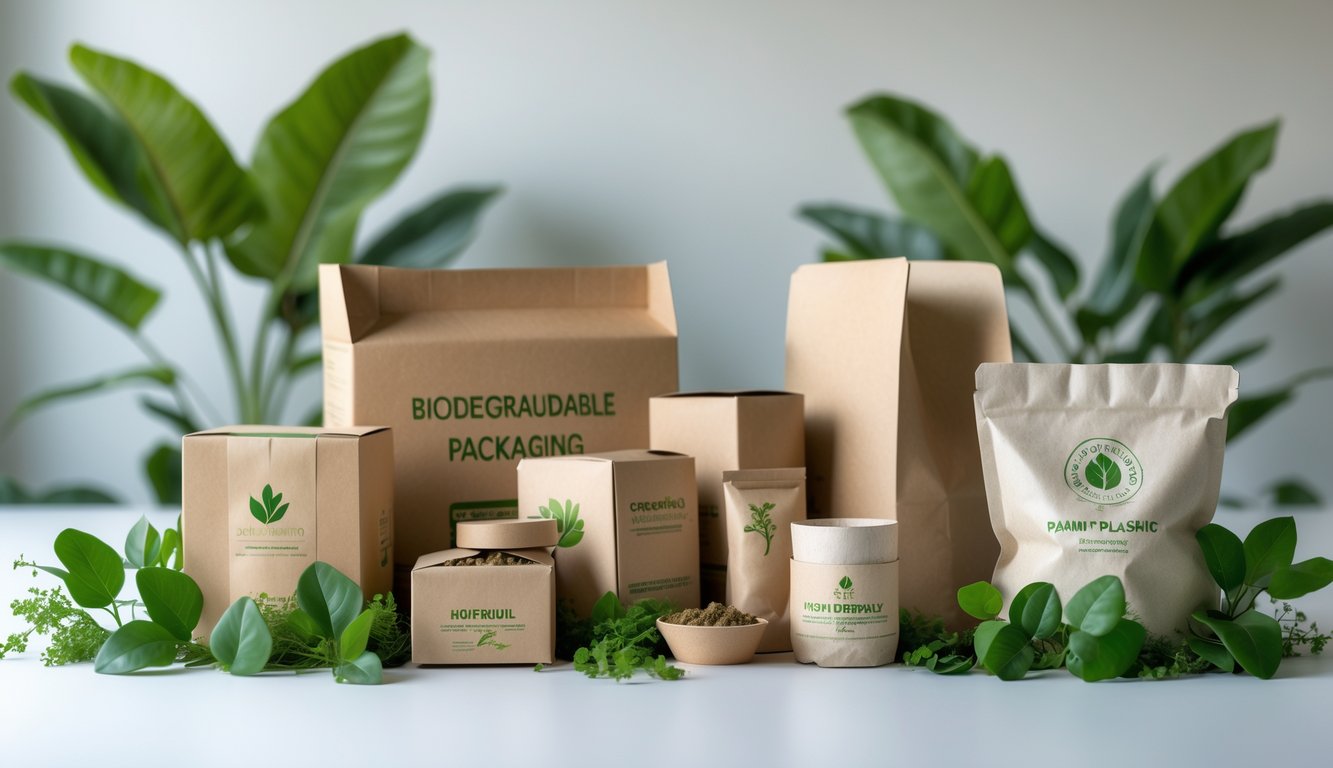
We see growing interest in materials certified to meet strict composting standards, which guarantees the packaging will safely and efficiently return to the environment. By choosing these products, we support sustainability efforts without sacrificing convenience or quality.
Understanding how biodegradable packaging works and the certifications behind it helps us make informed decisions about our environmental footprint. As we explore this topic, we’ll uncover the benefits, types, and practical applications of biodegradable solutions.
What is biodegradable packaging?
Biodegradable packaging breaks down naturally through the action of microorganisms, transforming back into natural elements like water, carbon dioxide, and biomass. It helps reduce waste buildup by decomposing faster than conventional plastics, making it a practical option for various industries.
Definition and overview
Biodegradable packaging consists of materials that can be decomposed by bacteria, fungi, or algae. Unlike traditional plastics, which can persist in the environment for centuries, these materials return to their natural state within months or a few years.
Materials often include cardboard, paper, starch-based films, and bio-based polymers. The key factor is not the origin but the molecular structure of the material, which allows microbes to break down its polymer chains.
Using biodegradable packaging minimizes landfill waste and reduces environmental impact. It also aligns with consumer demand for sustainable products, improving brand reputation and appeal.
Process of making biodegradable packaging
Making biodegradable packaging starts with selecting raw materials that microbes can easily digest. These often come from renewable sources like plants (corn starch, sugarcane) or fungi.
The manufacturing process involves converting these raw materials into films, sheets, or molded forms. Techniques include extrusion, casting, and coating, designed to retain functionality like durability and barrier properties while ensuring biodegradability.
Additives that speed up decomposition may be included, but they must not compromise the material’s safety or food compatibility. The final products are tested under specific conditions for biodegradation, such as temperature, moisture, and microbial activity, to ensure they meet industry standards.
This process supports a circular economy by enabling packaging to return safely to the environment without leaving toxic residues. For more detailed insights, see biodegradable packaging definition and benefits.
Types of biodegradable packaging materials
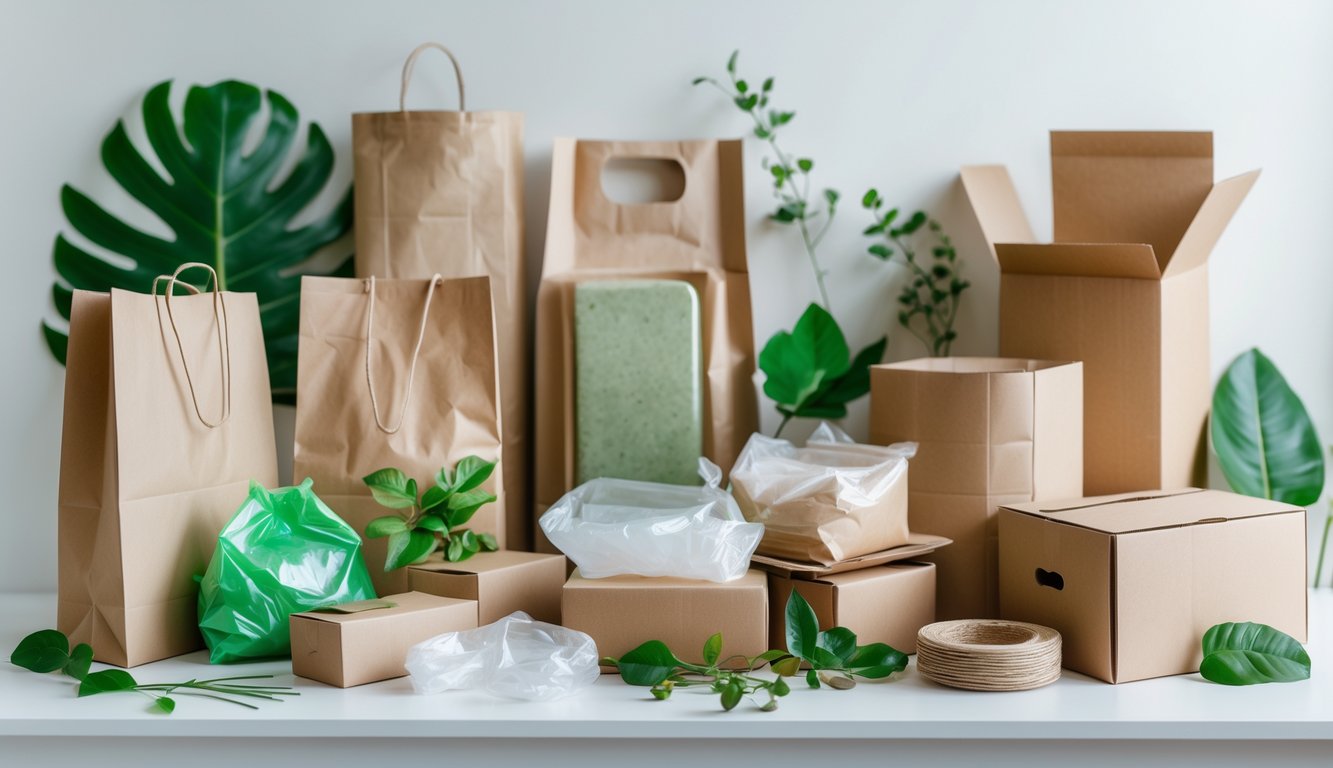
We use a range of biodegradable materials that break down naturally with minimal environmental impact. These options vary in composition and application but all aim to reduce waste and replace conventional plastics.
Biodegradable packing peanuts
Biodegradable packing peanuts are made primarily from natural starches, like corn or wheat. Unlike traditional polystyrene peanuts, they dissolve in water, making disposal easier and less harmful to the environment.
They offer good cushioning for fragile items and leave no toxic residue. Their lightweight nature reduces shipping costs without compromising protection. They provide a practical alternative for businesses seeking eco-friendly void fill solutions.
Corrugated bubble wrap
Corrugated bubble wrap replaces plastic bubbles with layers of fluted cardboard. It offers similar cushioning and impact resistance but is fully recyclable and biodegradable.
This material is ideal for protecting surfaces without creating plastic waste. It can be reused or composted, fitting well into circular packaging systems. Its strength and flexibility make it adaptable for various shipping needs.
Recycled cardboard
Recycled cardboard is widely used for boxes and inserts, made from post-consumer waste. It reduces the demand for virgin materials and lowers overall environmental footprint.
Strong and versatile, recycled cardboard can be customized for different packaging types. It biodegrades quickly in natural conditions and supports sustainable forestry by reducing deforestation pressure.
Bio-plastics
Bio-plastics are derived from renewable biological sources like corn starch or sugarcane. They function like conventional plastics but are designed to degrade in industrial composting environments.
We select bio-plastics to replace common plastic items such as bags and mailers, reducing fossil fuel dependency. They vary in compostability, so certification and proper disposal are essential for their environmental benefits.
Inflatable air pillows
Inflatable air pillows made from biodegradable films provide adjustable cushioning. Once deflated, these pillows break down faster than traditional plastic versions.
They use minimal material volume while maximizing protection. Air pillows reduce packaging weight and waste, especially when sourced from renewable, compostable biopolymers.
Cornstarch packaging
Cornstarch packaging is formed by processing corn into biopolymer sheets or foams. It’s compostable and used for trays, containers, and protective packaging.
This material offers good moisture resistance and decomposes quickly under composting conditions. It provides a sustainable alternative to polystyrene in food packaging and shipping applications.
Mushroom packaging
Mushroom packaging uses fungal mycelium grown around agricultural waste to create sturdy, moldable protective materials. It’s 100% compostable at home or in industrial settings.
We appreciate its renewable sourcing and ability to be grown locally, reducing transportation emissions. Its natural properties provide shock absorption suitable for delicate items.
Organic fabrics
Organic fabrics such as organic cotton or hemp fiber offer biodegradable wrapping and padding solutions. These materials are renewable and often produced with fewer chemicals.
They are reusable and compostable, ideal for brands focused on zero-waste packaging aesthetics. Organic fabrics provide flexibility, breathability, and cushioning without contributing plastic pollution.
Seaweed packaging
Seaweed-based packaging is an emerging option made from algae biomass. It can be fashioned into films, wrappers, and containers that dissolve harmlessly in water.
Seaweed packaging is rich in natural polymers and decomposes rapidly in marine environments, reducing ocean plastic pollution. Its renewable cultivation does not compete with food crops, elevating its sustainability profile.
How to identify if a package is biodegradable
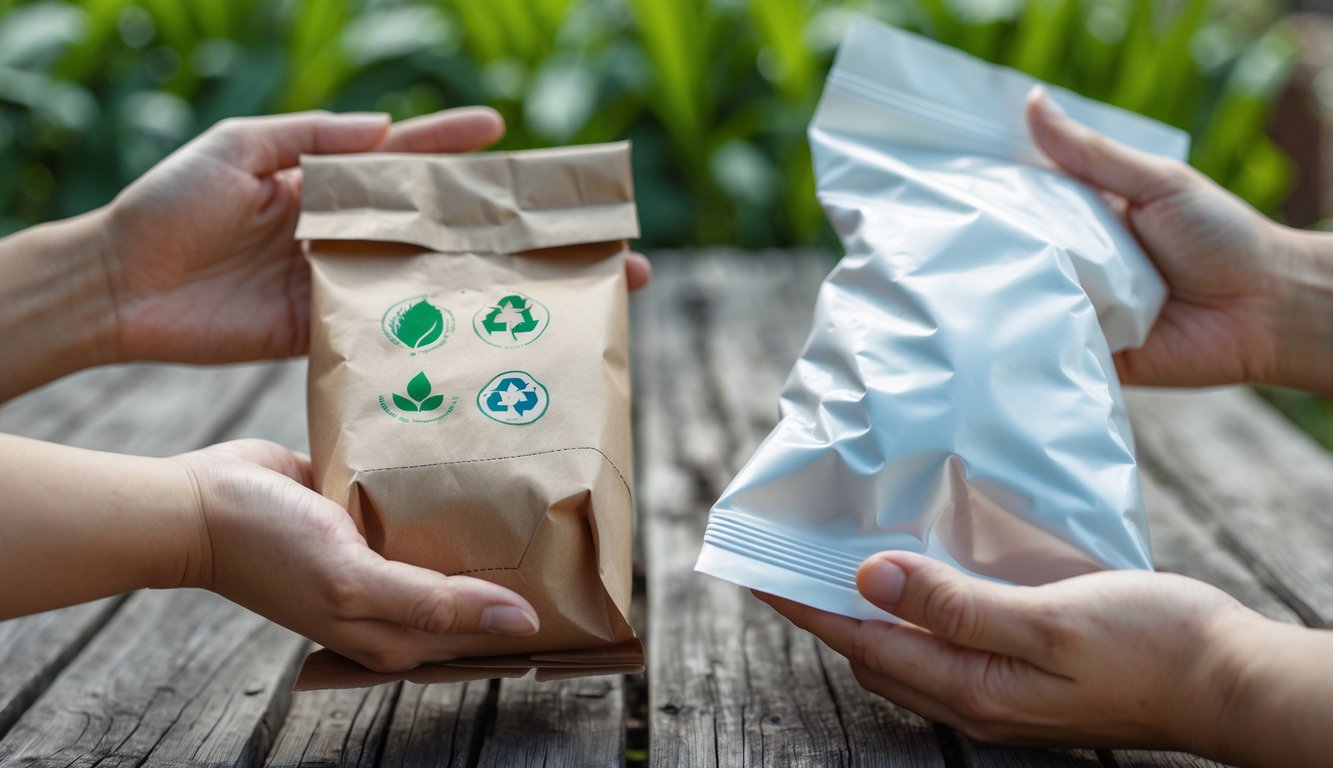
We start by looking for specific labels on the packaging. Packages marked “compostable” are typically certified to break down safely in home or commercial composting systems. These certifications offer a reliable way to verify biodegradability.
If a package is only labeled “biodegradable” without certification, it may not fully compost and often requires landfill disposal. This label alone is not enough to confirm safe biodegradation.
Material texture can also help us identify biodegradable packaging. Common biodegradable materials include corn starch, potato starch, and certain polyesters, which tend to feel slightly soft or “soggy” compared to traditional plastics.
We should be cautious of symbols or logos claiming compostability without backing. In some regions, like the US, such symbols have no regulated meaning and do not guarantee the package will break down as promised.
Ultimately, the best way to confirm biodegradability is to consult the manufacturer or look for third-party certifications indicating compliance with specific composting standards. This ensures the package will biodegrade within a reasonable timeframe under proper conditions.
| Identification Method | What to Look For |
|---|---|
| Label Text | “Compostable” with certification |
| Material | Corn starch, potato starch, biodegradable polyester |
| Texture | Slightly soft or “soggy” feel |
| Certification Check | Third-party verification or certification |
| Symbols | Verified logos, not unregulated claims |
Finding the right indicators helps us confidently choose biodegradable packaging that aligns with environmental goals. For more on certified compostable packaging, visit TIPA’s explanation of biodegradable packaging.
Advantages and benefits of biodegradable packaging
We recognize the growing importance of using materials that minimize harm to the environment and improve outcomes in specific industries. A shift toward biodegradable packaging addresses key concerns about sustainability, food safety, and global environmental impact.
Environmental benefits
Biodegradable packaging breaks down naturally within months, unlike traditional plastics that can persist for centuries. This rapid decomposition reduces the volume of waste in landfills and oceans.
It also lowers toxic emissions during disposal since it doesn’t release harmful chemicals when degrading. Using materials like plant fibers and starches conserves resources because they come from renewable sources.
Adopting biodegradable options aligns with our goals to reduce pollution and conserve ecosystems. Businesses supporting this shift not only reduce their environmental impact but also respond to increasing customer demand for greener products. For more details, see benefits of biodegradable packaging for the environment.
Benefits for the food industry
Biodegradable packaging offers several advantages to food services and manufacturers. Its materials often have natural moisture-absorbing and breathable qualities that help extend product freshness.
This packaging type can be compostable, meaning food waste and packaging can be processed together, simplifying disposal and reducing landfill use. It also reduces contamination risks tied to traditional plastics.
As consumers prioritize sustainability and safety, businesses in the food sector gain a competitive edge by integrating biodegradable packaging. This also supports regulatory compliance regarding food safety and packaging waste management. More insights can be found at benefits of biodegradable packaging for your business.
Why it is important globally
Globally, the rise of plastic waste presents a major environmental challenge. Biodegradable packaging offers a scalable solution to decrease plastic pollution.
Many countries face severe landfill space shortages and ocean pollution crises. Switching to materials that break down quickly helps manage waste streams effectively.
The global shift also supports international climate goals by lowering greenhouse gas emissions from landfill decomposition of plastics. Moreover, it encourages sustainable economic growth by creating markets for bio-based materials. Read about the global impact of biodegradable packaging.
Reducing environmental footprint
Switching to biodegradable packaging helps us lower our overall environmental footprint significantly. It decreases reliance on fossil fuels because many biodegradable materials come from plants, not petroleum.
This change also conserves resources by reducing landfill mass and pollution, and it limits toxic emissions during packaging production and disposal.
By choosing biodegradable options, companies showcase responsibility toward sustainability commitments and consumer expectations. The reduction in waste and emissions contributes directly to confronting climate change challenges. More on environmental footprint reduction can be found here.
Disadvantages and challenges of biodegradable packaging
Biodegradable packaging often comes with higher production costs compared to traditional plastics. This is mainly due to the use of renewable raw materials and specialized manufacturing processes that increase expenses.
Durability is another challenge. Biodegradable materials can be less resistant to moisture and physical stress, limiting their usefulness for certain products or long-term storage.
We must also consider the environmental conditions required for proper breakdown. Many biodegradable materials need industrial composting facilities to degrade effectively. If they end up in landfills, some may produce methane, a potent greenhouse gas.
There is also inconsistency in standards and definitions, which can cause confusion about what qualifies as biodegradable. This affects consumer trust and regulatory frameworks.
| Challenge | Impact |
|---|---|
| Higher production costs | Less affordable for widespread use |
| Limited durability | Not suitable for all packaging needs |
| Specific degradation conditions | May not break down in natural environments |
| Methane emissions | Potential environmental harm in landfills |
We encounter ongoing technological limitations. Innovations are addressing these issues, but biodegradable packaging is not yet a perfect or universal solution.
For more details on these challenges, see the analysis on disadvantages of biodegradable packaging.
Applications and trends in biodegradable packaging
Biodegradable packaging is rapidly growing in both scope and functionality. It spans multiple industries, driven by advances in materials science and increasing consumer demand for sustainable solutions. Innovation focuses not only on reducing environmental impact but also on enhancing usability and brand differentiation.
Global food brands using biodegradable packaging
Many global food brands have integrated biodegradable packaging to reduce plastic waste and meet sustainable goals. Companies are opting for packaging made from plant-based polymers, such as cornstarch and sugarcane, which break down naturally without leaving harmful residues.
This shift often involves replacing conventional plastic containers, wrappers, and trays with compostable alternatives. Brands also highlight biodegradability as part of their marketing, targeting consumers who prioritize environmental responsibility.
Adoption is particularly strong in fresh produce, ready-to-eat meals, and snack packaging, where preserving food quality and shelf life remains crucial. We see ongoing collaboration between material suppliers and food companies to develop packaging that balances performance and sustainability (source).
Latest trends in biodegradable packaging
Recent trends show a clear push towards multifunctional and hybrid materials that combine biodegradability with durability. Blends of biopolymers improve strength and moisture resistance, which are critical for packaging food and personal care items.
The rise of biodegradable packing peanuts and loose-fill materials exemplifies changes outside container packaging. These alternatives use plant starches that dissolve or decompose quickly after use, reducing landfill impact.
Another key trend is transparent biodegradable films, enabling full recyclability while keeping products visible to consumers. Regulatory pressure and certifications are also driving standardization and consumer trust.
We observe increased investment in R&D for next-generation bio-materials that can perform in harsh environments without synthetic additives (source).
Smart biodegradable packaging solutions
Integrating smart technology with biodegradable packaging creates new opportunities for supply chain transparency and consumer engagement. Sensors and indicators made from biodegradable materials can monitor freshness, temperature, or exposure to contaminants.
These smart features enable brands to reduce food waste by alerting users to spoilage or improper storage. They also improve traceability, which benefits quality control and regulatory compliance.
The challenge is to produce these smart components in ways that do not compromise overall biodegradability. We see prototypes using organic inks, plant-based electrodes, and dissolvable circuits moving closer to commercial use.
Smart biodegradable packaging thus represents a fusion of sustainability and innovation with practical benefits for both producers and consumers (source).
Custom branding and packaging innovations
Brands are leveraging biodegradable packaging to reinforce their sustainability story through custom designs and innovative formats. Custom shapes, tactile textures, and printed graphics using eco-friendly inks help packaging stand out on shelves while minimizing environmental impact.
Advances in biodegradable inks and coatings enable high-quality visuals without heavy chemicals or plastic laminates. This allows companies to maintain strong brand identity and consumer appeal.
Some brands use modular or refillable packaging systems to extend product life and reduce waste. We also see the emergence of biodegradable adhesives and labels that can be composted along with the main packaging.
These innovations help companies meet strict environmental claims and regulations while enhancing customer experience (source).
Sustainable packaging and shipping solutions
We prioritize solutions that reduce waste and environmental impact while maintaining product protection and shipping efficiency. Using the right materials and design helps us meet sustainability goals and customer expectations efficiently.
Eco-friendly boxes, bags, and mailers
Eco-friendly packaging often uses recycled or biodegradable materials like kraft paper, cornstarch-based plastics, and recycled cardboard. These materials break down quickly or can be recycled multiple times without losing strength.
We look for packaging that offers durability and protection while minimizing carbon footprint. Boxes and mailers made from 100% recycled content or supplemented with plant-based fibers are common choices. Adding compostable liners or biodegradable void fill reduces landfill waste.
Companies like EcoEnclose specialize in custom boxes and bags designed to be eco-conscious and fit specific shipping needs. Choosing certified materials such as FSC-certified paper ensures responsible sourcing and helps us make informed packaging decisions.
Reusable packaging options
Reusable packaging reduces waste by allowing multiple shipment cycles with the same container. Materials such as durable plastics, canvas bags, or rigid boxes can be cleaned and reused in logistics chains.
We assess the lifecycle costs and environmental benefits of reusable versus single-use packaging. Reusable options often require tracking systems for returns and inspection but minimize ongoing material consumption.
This approach suits industries with localized shipping or return programs, where containers can easily circulate. Selecting reusables that fold or nest efficiently optimizes transport space and lowers carbon emissions.
Innovative materials like seaweed and algae ink
New materials like seaweed-based packaging and algae-derived ink are emerging as sustainable alternatives. Seaweed packaging is compostable, requires low water and energy, and decomposes quickly without toxic residues.
Algae ink reduces reliance on petroleum and lowers volatile organic compound emissions compared to traditional inks. It also supports carbon capture since algae absorb CO₂ during growth.
Incorporating these materials helps us meet stricter environmental standards and appeal to eco-conscious consumers. Their growing availability makes it easier to adopt cutting-edge solutions that reduce impact from both packaging and printing.
For more details on biodegradable packaging innovations, visit Biodegradable Packaging for Sustainable Product Shipping.
About The Author
